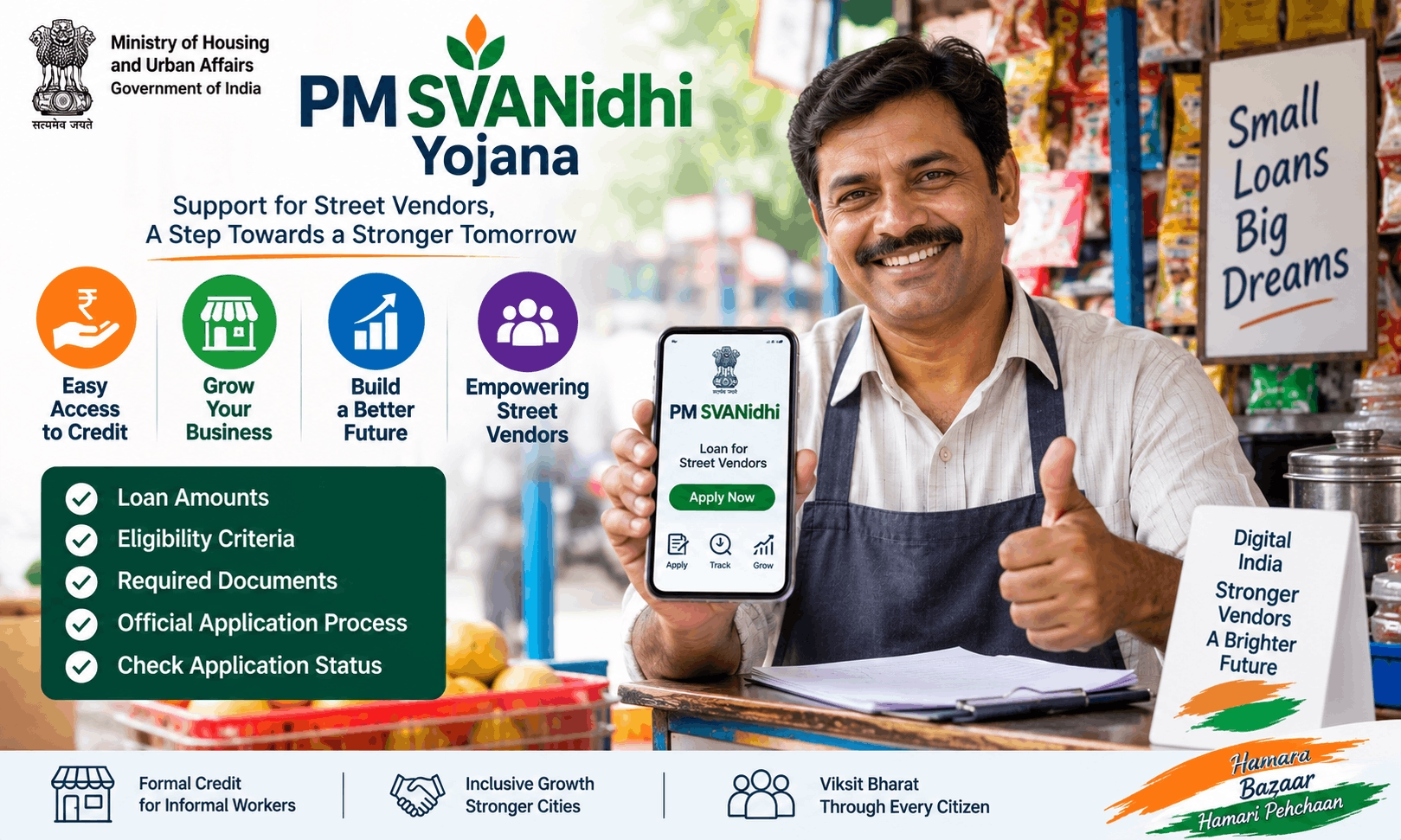
PM Svanidhi Yojana Loan: More than 75 lakh street vendors across India have now received a PM SVANidhi Yojana loan, with total disbursals crossing Rs 17,800 crore since the scheme launched in June 2020. That milestone comes just months after the Union Cabinet approved a restructuring of the scheme that raised the first loan tranche from Rs 10,000 to Rs 15,000 and the second tranche from Rs 20,000 to Rs 25,000, while extending the lending window all the way to March 31, 2030. For a vendor selling vegetables, tea or street food without any collateral to offer a bank, this is one of the very few formal credit lines built specifically for them.
The bigger change most people still do not know about is the SVANidhi Credit Card, a UPI linked RuPay card launched for beneficiaries who have repaid their second loan tranche on time, giving them a working credit limit for daily business needs instead of waiting for the next loan cycle. Combined with a 7 percent annual interest subsidy on timely repayment and digital transaction cashback, the scheme has quietly become one of the largest micro credit programs for India’s informal economy. This guide explains exactly how to apply for a PM SVANidhi Yojana loan in 2026, who is eligible, what documents are needed, and how to track your application status. We’ll be updating this article monthly as loan amounts, targets, and portal features change.
What Is PM SVANidhi Yojana?
PM SVANidhi, short for Pradhan Mantri Street Vendor’s AtmaNirbhar Nidhi, is a Central Sector Scheme run by the Ministry of Housing and Urban Affairs to give street vendors access to collateral free working capital loans. It was launched on June 1, 2020, originally to help vendors restart their businesses after pandemic disruptions, and has since grown into a permanent credit access program for the urban and semi urban informal economy. The restructured scheme now targets 1.15 crore beneficiaries in total, including 50 lakh new vendors, with a total outlay of Rs 7,332 crore.
Latest Loan Amounts Under the Restructured Scheme
The scheme works on a graded tranche system, where a vendor becomes eligible for a larger loan only after repaying the previous one on time. Under the current structure, the first loan goes up to Rs 15,000 with a repayment tenure of 12 months, the second loan goes up to Rs 25,000 with an 18 month tenure, and the third loan remains capped at Rs 50,000 with a repayment period of up to 36 months. This tranche based design is meant to build a formal credit history for vendors who have never had one, so that timely repayment steadily increases their borrowing capacity.
Personal Loan Eligibility in India: Why Banks Are Screening Applications More Strictly This Year
Best Student Loan Apps in India in 2026: What the Latest Government Data Shows Before You Apply
Who Is Eligible for a PM SVANidhi Yojana Loan
Eligibility is built around one core requirement, that the applicant is a street vendor operating in an urban or peri-urban area as of a specified survey date, or has since been issued a Certificate of Vending or a Letter of Recommendation by their Urban Local Body. Vendors who hold a valid Certificate of Vending and an identity card issued during the municipal survey can apply directly. Vendors who were left out of the original survey, including those who started vending later, can still apply after getting a Letter of Recommendation from their Urban Local Body or Town Vending Committee, which keeps the scheme open to genuinely new entrants rather than closing it off to only the original beneficiary list.
Documents Required to Apply
Applying for a PM SVANidhi Yojana loan requires minimal documentation compared to a traditional bank loan. Vendors typically need their Aadhaar card linked to an active mobile number for OTP based e-KYC, the Certificate of Vending or Letter of Recommendation issued by the Urban Local Body, a bank account in the applicant’s name for direct loan disbursal, and a passport size photograph. No income proof, collateral, or guarantor is required at any stage of the application, which is one of the biggest differences between this scheme and a standard NBFC or bank personal loan.
How to Apply for PM SVANidhi Yojana Loan Online
The entire application runs through the official PM SVANidhi portal or the PM SVANidhi mobile app, both free to use with no facilitation fee at any step. On the portal, applicants select Apply for Loan, enter their mobile number and verify it through an OTP, after which the system checks whether the applicant’s details already exist in the survey database using their Survey Reference Number. Vendors without a Survey Reference Number can proceed by submitting a Letter of Recommendation instead. Once identity is verified, the applicant fills in personal and business details, selects a preferred lending bank from the list shown on the portal, uploads the required documents, and submits the form. The application then moves to the selected bank for verification and sanction, after which the loan amount is disbursed directly into the applicant’s bank account.
Interest Subsidy and Digital Cashback Benefits
Beyond the loan itself, the scheme rewards disciplined repayment and digital adoption. Vendors who repay their EMIs on time receive a 7 percent per annum interest subsidy, credited quarterly directly into their loan account, which meaningfully reduces the effective cost of borrowing. On top of that, vendors who adopt digital payments for their daily sales get a cashback incentive of up to Rs 1,600 per year, credited for verified transactions done through QR codes or UPI. Both benefits stop if the vendor defaults on repayment, which is designed to reinforce the habit of timely EMI payment rather than being treated as a one time bonus.
The SVANidhi Credit Card, What Changed in 2026
One of the most significant additions to the scheme is the SVANidhi Credit Card, a UPI linked RuPay card launched for beneficiaries who have successfully repaid their second loan tranche. The card comes with a working credit limit of up to Rs 30,000, giving vendors flexible, revolving access to funds for day to day business needs rather than depending entirely on the next loan tranche cycle. This addition effectively turns the scheme from a series of fixed term loans into a broader credit relationship, closer to how a small business line of credit functions for a formal sector borrower.
How to Check PM SVANidhi Yojana Loan Application Status
Applicants can track their PM SVANidhi Yojana loan status directly on the official portal without visiting a branch or ULB office. On the homepage, selecting Know Your Application Status and entering the registered mobile number along with the OTP shows the current stage, whether the application is pending with the Urban Local Body, forwarded to the selected bank, sanctioned, or already disbursed. This same tracking feature is available through the mobile app, making it possible for a vendor to check progress from a basic smartphone without needing any assistance.
Key Highlights
| Detail | Current Status |
|---|---|
| Vendors funded so far | Over 75 lakh, loans worth Rs 17,800 crore plus |
| Scheme extended until | March 31, 2030 |
| First loan tranche | Up to Rs 15,000, 12 month tenure |
| Second loan tranche | Up to Rs 25,000, 18 month tenure |
| Third loan tranche | Up to Rs 50,000, 36 month tenure |
| Interest subsidy on timely repayment | 7% per annum, credited quarterly |
| Digital transaction cashback | Up to Rs 1,600 per year |
| SVANidhi Credit Card limit | Up to Rs 30,000, after second tranche repayment |
| Total restructured scheme outlay | Rs 7,332 crore |
| New beneficiary target | 50 lakh additional vendors |
Official Resources and Links
| Purpose | Official Website |
|---|---|
| PM SVANidhi loan application and registration | https://pmsvanidhi.mohua.gov.in |
| Check PM SVANidhi loan application status | https://pmsvanidhi.mohua.gov.in/Home/Search |
| Ministry of Housing and Urban Affairs | https://mohua.gov.in |
| PM SVANidhi toll free helpline | 1800-11-1979 |
FAQs
How much loan can I get in my first application under PM SVANidhi Yojana?
First time applicants are eligible for a loan of up to Rs 15,000, repayable over a 12 month tenure through equal monthly instalments.
Do I need a Certificate of Vending to apply for the loan?
It helps if you already have one, but vendors without a Certificate of Vending can still apply by submitting a Letter of Recommendation issued by their Urban Local Body or Town Vending Committee.
Is there any processing fee to apply for PM SVANidhi Yojana loan?
No, the entire application process on the official portal and mobile app is free, and vendors should never pay any agent or third party claiming to speed up loan approval.
How long does it take to get the loan after applying?
Processing time varies by the selected bank and local verification, but most sanctioned applications are disbursed within a few weeks once documents and bank verification are complete.
What happens if I do not repay the first loan on time?
Missing repayments means losing the 7 percent interest subsidy and the digital cashback benefit for that period, and it also reduces the chances of getting approved for the next, larger loan tranche.
Can a vendor who was not covered in the original 2020 survey still apply now?
Yes, the scheme remains open to new entrants through the Letter of Recommendation route, and the restructured scheme specifically targets 50 lakh new beneficiaries beyond the original list.
Conclusion
The PM SVANidhi Yojana loan has grown from a pandemic relief measure into one of the largest formal credit programs for India’s street vendors, now extended until 2030 with higher loan amounts, a dedicated credit card, and built in incentives for timely repayment. For a vendor with no collateral and no prior banking relationship, the tranche based structure offers a realistic path to build credit history while accessing working capital at a genuinely subsidised cost. Applying directly through the official portal or app, without going through any paid agent, remains the safest and fastest way to get a decision on your loan.
Get A Personal Loan For Bad Credit Score In India In 2026, With Rates, NBFC Options And RBI Rules
Personal Loan Up To 50 Lakh India: How to Compare Rates, Eligibility, and Documents in 2026