The Jan Samarth Portal has now processed loan applications worth more than Rs 1 lakh crore, with 254 lending institutions officially onboarded as of March 20, 2026, spanning 12 public sector banks, 20 private banks, 28 regional rural banks, 173 district central cooperative banks, 15 NBFCs and six small finance banks. For anyone trying to figure out how to do a jan samarth portal loan apply process without running between bank branches, that scale matters, because it means the portal is no longer a pilot project, it is now the single largest digital gateway for credit-linked government schemes in the country.
What makes this relevant right now is how much friction the portal has removed since it launched on June 6, 2022. Instead of visiting a bank to ask which subsidised scheme you qualify for, and often getting pushed toward a regular unsubsidised loan instead, the portal lets you check eligibility, compare schemes, and get an in-principle approval before a bank even sees your application. It currently brings together 15 credit-linked schemes, from Mudra loans for small businesses to Kisan Credit Card for farmers and education loan subsidies for students, all under one login. This guide walks through exactly how to apply, what documents you need, and which schemes are actually available on the platform today. We’ll be updating this article monthly as new schemes, lenders and processing data are added.
What Is the Jan Samarth Portal?
Jan Samarth is a national digital platform built by the Government of India to unify credit-linked government schemes into a single application system. Rather than each ministry running its own separate loan portal, Jan Samarth connects beneficiaries, banks and government departments on one interface, covering sectors such as education, business activity, agriculture infrastructure, livelihood and housing. The portal does not disburse loans itself, it matches an applicant with eligible schemes and connected lenders, after which the selected bank carries out its own verification and final sanctioning.
Why the Portal Exists and What Problem It Solves
Before Jan Samarth, a small business owner or a student had to independently research which government scheme they qualified for, then visit specific bank branches that may or may not have been briefed on that scheme’s subsidy rules. This gap was often filled by private agents charging a commission of one to five percent just to guide applicants through paperwork they could have completed themselves. Jan Samarth removes that middle layer by showing every eligible scheme’s interest rate, subsidy structure, collateral requirement and eligible loan amount on one screen, so the applicant can compare options directly before choosing a lender.
Personal Loan Eligibility in India: Why Banks Are Screening Applications More Strictly This Year
Loan Categories Available on Jan Samarth
The portal organises its 15-plus schemes into distinct categories rather than listing them randomly. Education loans cover schemes such as the Central Sector Interest Subsidy Scheme for economically weaker students, the Dr Ambedkar Interest Subsidy for OBC and EBC category students, and Padho Pardesh for minority students pursuing education abroad. Business activity loans include the Pradhan Mantri Mudra Yojana, offering loans up to Rs 20 lakh for small and micro enterprises, along with PMEGP and Stand-Up India for first-time entrepreneurs. Agriculture infrastructure schemes cover Kisan Credit Card and related farm equipment and warehousing loans. Livelihood schemes include PM SVANidhi for street vendors, and housing-linked schemes support subsidised home loan interest for eligible categories.
Step by Step Process to Apply for a Loan on Jan Samarth Portal
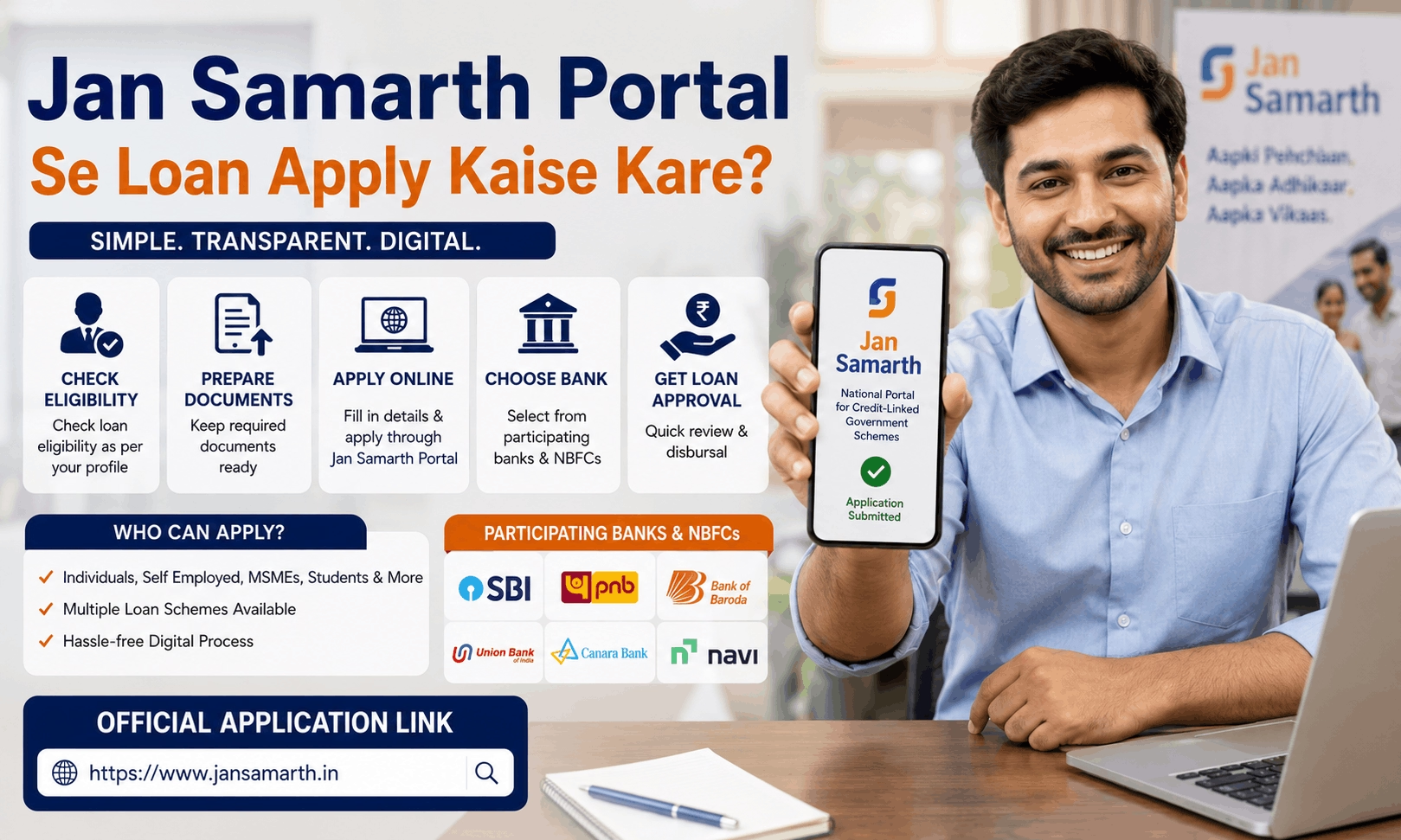
Applying on the Jan Samarth Portal follows a consistent flow regardless of which scheme you are pursuing. First, visit the official portal and register using a mobile number, verifying it through an OTP, then set a password for future logins. Second, log in and select the relevant loan category, such as Business Activity or Education, and answer a short set of questions about your funding purpose, income and location. Third, the portal displays a personalised list of schemes you are eligible for, along with each one’s interest rate, subsidy details and maximum loan amount, letting you compare them side by side rather than researching each scheme separately. Fourth, select your preferred bank and branch from the list of participating lenders shown for that scheme. Fifth, upload the required documents and submit the application, which then moves to the selected bank’s own processing queue for final verification, sanction and disbursal.
Documents Typically Required
While document requirements vary slightly by scheme, most Jan Samarth applications ask for Aadhaar and PAN for identity verification, since the portal integrates directly with these databases to speed up eligibility checks. Business loan applicants generally need GSTIN details where applicable, business registration proof, and bank statements for the past six months. Education loan applicants need an admission letter, fee structure and income proof of the co-applicant, while agriculture scheme applicants typically need land records and Kisan Credit Card details where relevant. Because Aadhaar, PAN and GSTIN are verified digitally through the portal itself, applicants usually spend far less time on physical document submission compared to a traditional bank visit.
Jan Samarth vs Approaching a Bank Directly
The core difference between applying through Jan Samarth and walking into a bank branch is visibility into every scheme you qualify for at once. A bank employee typically only discusses the products their own branch actively pushes, which means an eligible subsidy scheme can go completely unmentioned. Jan Samarth removes this blind spot by surfacing every matching scheme with its exact interest rate and subsidy terms before you commit to a lender. That said, the portal only provides in-principle approval and eligibility matching, final sanctioning and disbursement is still carried out by the selected bank following its own internal due diligence, so approval is never guaranteed simply by applying through the portal.
Common Mistakes Applicants Make on the Portal
A frequent error is registering with a mobile number the applicant no longer actively uses, which then blocks OTP based login later in the process, since each mobile number can only be linked to one account. Another common mistake is selecting a bank branch based only on proximity rather than checking which lender is actually the strongest processor for that specific scheme, since processing speed and internal sanctioning criteria still vary bank to bank even within the same government scheme. Applicants also sometimes assume the portal itself disburses funds, when in reality every rupee is released only by the selected bank after its own sanction process is complete.
Best Student Loan Apps in India in 2026: What the Latest Government Data Shows Before You Apply
Get A Personal Loan For Bad Credit Score In India In 2026, With Rates, NBFC Options And RBI Rules
Key Highlights
| Detail | Current Status |
|---|---|
| Portal launch date | June 6, 2022 |
| Total loan applications processed | Over Rs 1 lakh crore in value |
| Lending institutions onboarded | 254 as of March 20, 2026 |
| Public sector banks connected | 12 |
| Private sector banks connected | 20 |
| Regional rural banks connected | 28 |
| District central cooperative banks connected | 173 |
| NBFCs connected | 15 |
| Small finance banks connected | 6 |
| Credit-linked schemes hosted | 15 plus, across education, business, agriculture, livelihood and housing |
Official Resources and Links
| Purpose | Official Website |
|---|---|
| Jan Samarth Portal registration and login | https://www.jansamarth.in |
| Ministry of Finance, Department of Financial Services | https://financialservices.gov.in |
| PM SVANidhi Yojana on Jan Samarth | https://pmsvanidhi.mohua.gov.in |
| PM Vidyalaxmi education loan portal | https://pmvidyalaxmi.co.in |
FAQs
Is Jan Samarth Portal free to use?
Yes, registration and applying for any scheme on the portal is completely free, and no agent or third party should be paid to complete an application on your behalf.
Does applying through Jan Samarth guarantee my loan will be approved?
No, the portal only provides eligibility matching and in-principle approval based on the details you enter. Final sanctioning and disbursement depends entirely on the selected bank’s own verification and internal credit policy.
Which government loan schemes can I apply for through Jan Samarth?
The portal currently hosts 15 or more schemes across education, business activity, agriculture infrastructure, livelihood and housing, including Mudra Yojana, PM SVANidhi, PMEGP, Kisan Credit Card and several education loan interest subsidy schemes.
Can I apply for more than one scheme at the same time on the portal?
Yes, the portal shows every scheme you are eligible for based on your profile, and you can review and apply to more than one if your funding needs and eligibility criteria allow it.
What should I do if I do not receive the OTP while registering?
Wait a couple of minutes and use the resend OTP option on the portal. If the issue continues, check that the mobile number entered is the same one linked to your Aadhaar record.
Is collateral required for loans applied through Jan Samarth?
It depends on the scheme. Smaller loans such as Mudra Shishu category loans and PM SVANidhi are collateral free, while larger loan amounts under certain schemes may require security depending on the lender’s policy.
Conclusion
The Jan Samarth Portal has moved from a pilot digital initiative to a genuinely large-scale credit gateway, now connecting 254 lending institutions and processing more than Rs 1 lakh crore in loan applications across 15 or more government schemes. For anyone comparing where to complete a jan samarth portal loan apply request, the platform’s real advantage is transparency, it shows every scheme you are eligible for on one screen instead of relying on a single bank branch to volunteer that information. The final decision still rests with the selected lender, so completing accurate documentation and choosing a bank with a strong track record for that specific scheme remains the most reliable way to move from application to disbursal quickly.
Personal Loan Up To 50 Lakh India: How to Compare Rates, Eligibility, and Documents in 2026